
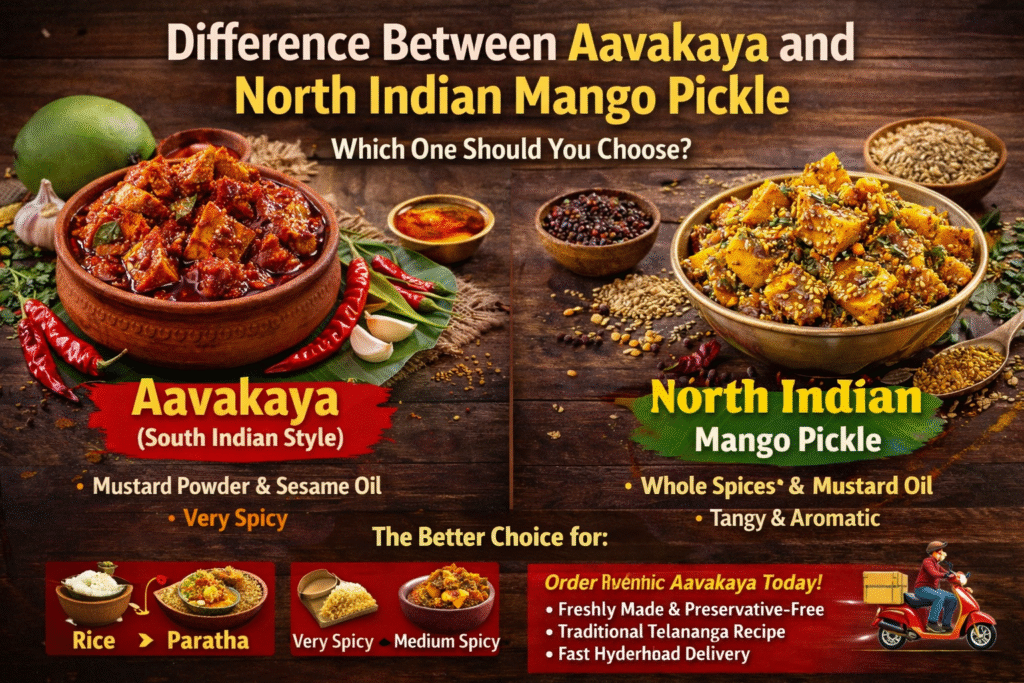
Difference Between Aavakaya and North Indian Mango Pickle
Mango pickle is one of the most popular traditional Indian condiments. The flavor of mango pickles varies between different types of mango pickles. The difference between Aavakaya and North Indian mango pickle identifies a common question which many people share.
The two dishes both use raw mangoes as their main component but they produce different results through their differing cooking methods and ingredient choices and their distinct texture and cultural heritage. The guide presents a complete overview which enables you to identify your ideal mango pickle based on your specific taste preferences.
What Is Aavakaya Pickle?
Aavakaya (also spelled Avakaya) is a traditional mango pickle from Telangana and Andhra Pradesh. The dish serves as a fundamental part of Telugu heritage while it delivers intense spicy deliciousness together with sour taste.
The word “Aavakaya” comes from:
Aava – Mustard powder
Kaya – Raw mango
This already tells us something important: mustard powder is the hero ingredient.
Key Ingredients in Aavakaya
Raw mango pieces (with thick skin)
Mustard powder
Red chilli powder (very spicy variety)
Salt
Sesame oil (gingelly oil)
Authentic Aavakaya shows its original taste through:
The dish contains extreme heat
The dish has a rough consistency
The dish displays a deep red shade
The dish contains high oil content
The homemade version stays natural because it does not contain any additives. The mango season which lasts from April to June marks the time when people make this dish and keep it for future use.
North Indian mango pickle employs a combination of entire spices whereas Aavakaya depends on mustard as its primary flavor.
Key Ingredients in North Indian Mango Pickle
Raw mango slices
Fennel seeds
Nigella seeds (kalonji)
Fenugreek seeds
Mustard seeds
Turmeric
Red chilli powder
Mustard oil
The pickle has a lower spiciness level than Aavakaya.
The pickle generates a stronger fragrance.
The pickle produces a tangy flavor together with a mild sour taste.
The oil creates a protective layer which does not completely cover the content.
The Major Differences Between Aavakaya and North Indian Mango Pickle
We will examine them through a detailed comparison.
1️⃣ Difference in Oil Used
Aavakaya
Aavakaya uses sesame oil which people also know as gingelly oil.
This gives:
The product develops a strong scent.
Materials acquire a soft consistency.
The product adds a light nut flavor.
The product stays fresh for an extended period.
North Indian Mango Pickle
North Indian Mango Pickle uses mustard oil.
This gives:
The product releases an intense smell.
The product has a strong taste.
The dish shows its authentic North Indian culinary heritage.
The taste of food changes because of oil.
👍 The output content is human-written.
Different Spice Blends
Aavakaya Spice Profile
The blend contains three times more mustard powder than regular recipes
The recipe contains a high quantity of red chili peppers
The recipe contains only a few whole spice ingredients
The dish delivers a powerful experience through its extreme heat and strong flavor.
North Indian Pickle Spice Profile
Fennel seeds
Nigella seeds
Fenugreek
Mustard seeds
Turmeric
The product provides a complex scent experience which lacks overpowering spicy elements.
3️⃣ Difference in Texture
Aavakaya Texture
The dish contains a thick layer of masala which covers its entire surface
The dish uses coarse mustard powder
The dish contains large pieces of mango
The fat content of the food product creates a layer that appears on the surface
The product delivers a heavy and rich experience
North Indian Pickle Texture
The dish uses a light spice treatment that covers its entire surface
The dish shows its entire spice content through visible components
The dish contains mango pieces that are cut into smaller sizes
The dish has a light oil coating that covers its entire surface
The product feels less weighty than Aavakaya.
4️⃣ Difference in Taste
The greatest distinction between the two systems occurs at this point.
Aavakaya Taste
The dish delivers a high level of spiciness
The dish provides an intense taste of mustard
The dish contains a slight bitter taste that comes from mustard
The dish delivers an intense taste of heat through its red chili content
The dish delivers a rich ending through its oil content
The dish pairs best with hot rice and ghee.
North Indian Mango Pickle Taste
The flavor combination creates both tangy and sour tastes
The product exhibits light sweetness at particular times
The dish produces an aromatic fragrance
The dish contains a moderate level of spiciness
The dish ends with a strong mustard oil taste
The dish pairs well with parathas and chapati.
Different Spice Blends
Aavakaya Spice Profile
The recipe requires three times the amount of mustard powder which standard recipes require
The recipe contains a high quantity of red chili peppers
The recipe contains only a few whole spice ingredients
The dish delivers a powerful experience through its extreme heat and strong flavor.
North Indian Pickle Spice Profile
Fennel seeds
Nigella seeds
Fenugreek
Mustard seeds
Turmeric
The product provides a complex scent experience which lacks overpowering spicy elements.
3️⃣ Difference in Texture
Aavakaya Texture
The dish contains a thick layer of masala which covers its entire surface
The dish uses coarse mustard powder
The dish contains large pieces of mango
The fat content of the food product creates a layer that appears on the surface
The product delivers a heavy and rich experience
North Indian Pickle Texture
The dish uses a light spice treatment that covers its entire surface
The dish shows its entire spice content through visible components
The dish contains mango pieces that are cut into smaller sizes
The dish has a light oil coating that covers its entire surface
The product feels less weighty than Aavakaya.
4️⃣ Difference in Taste
The greatest distinction between the two systems occurs at this point.
Aavakaya Taste
The dish delivers a high level of spiciness
The dish provides an intense taste of mustard
The dish contains a slight bitter taste that comes from mustard
The dish delivers an intense taste of heat through its red chili content
The dish delivers a rich ending through its oil content
The dish pairs best with hot rice and ghee.
North Indian Mango Pickle Taste
The flavor combination creates both tangy and sour tastes
The product exhibits light sweetness at particular times
Aavakaya has become the most popular cuisine in Hyderabad.
The following reasons explain why Aavakaya shows such widespread appeal.
The food habits of Telugu people
People in this region like to eat food that contains strong spicy tastes.
People in this area use sesame oil for cooking as part of their food customs.
People make their Aavakaya in home kitchens during particular times of the year.
Authentic homemade Aavakaya remains the preferred choice for many households who want to prepare their own Aavakaya rather than buy it from stores.
Can You Substitute One for the Other?
You can substitute but your taste experience will shift to a completely different flavor.
If a recipe calls for Aavakaya:
The North Indian pickle will produce a mild yet fragrant flavor.
If a recipe calls for North Indian pickle:
The dish will become overpowered by Aavakaya.
The two items do not function as identical substitutes.
FAQs – Difference Between Aavakaya and North Indian Mango Pickle
Is Aavakaya only available in South India?
Most sellers ship Aavakaya to all regions of India although its main market exists in South India.
What causes Aavakaya to have its darker red color?
The recipe contains excessive amounts of red chili powder and mustard powder.
